
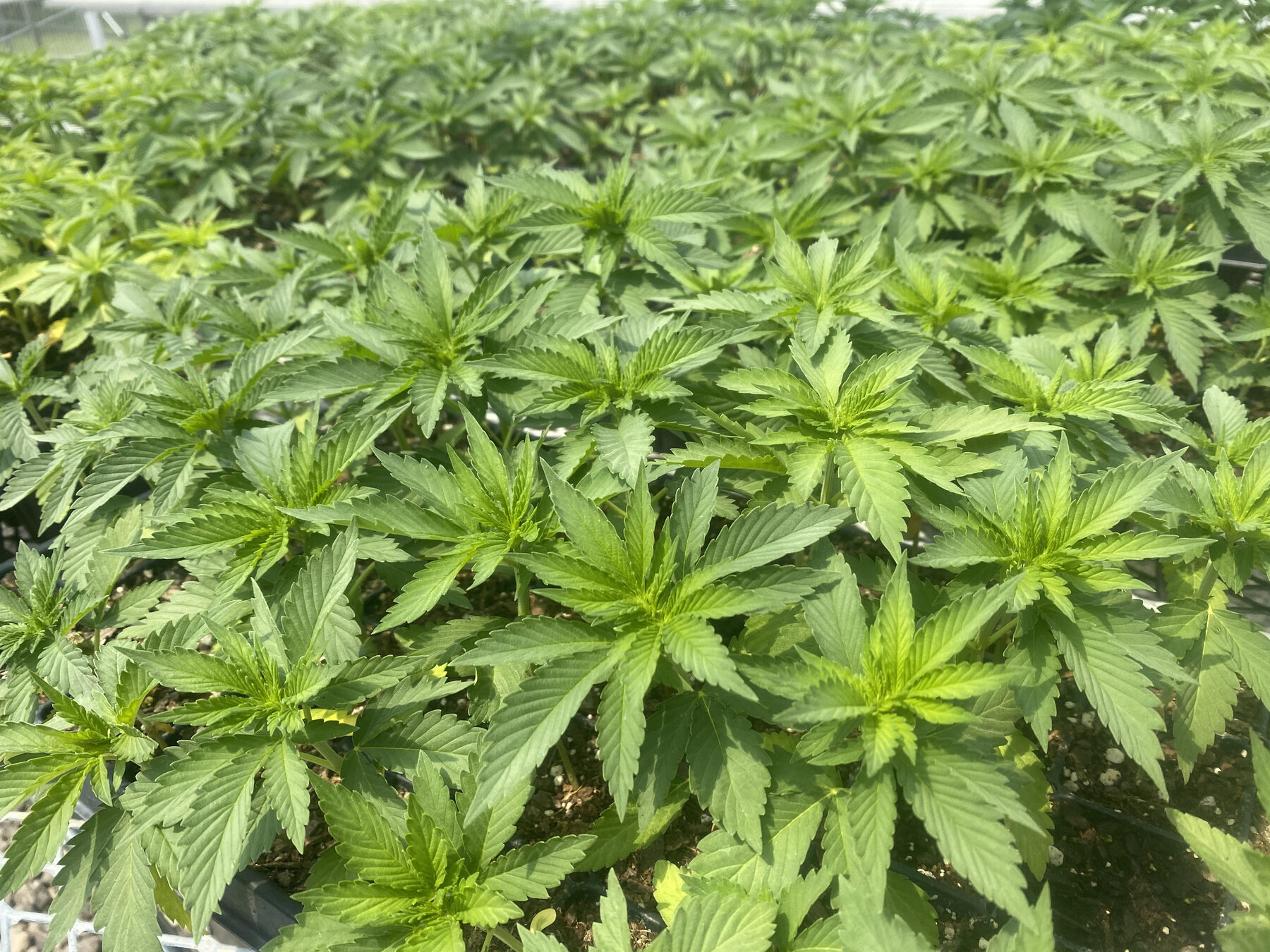
What is CBG?
CBG, or cannabigerol, is the chemical precursor to nearly every other cannabinoid found in hemp and cannabis. Here's why that matters, and what makes it different from CBD.
CBG, in plain language.
CBG stands for cannabigerol. It's one of more than 100 cannabinoids — chemical compounds — found naturally in the hemp plant. You've probably heard of THC and CBD; CBG sits in the same family.
What makes CBG distinctive is its place in the plant's chemistry. It's often called the "mother cannabinoid" because it's the chemical starting point that everything else develops from. As a hemp plant grows and matures, CBG gradually converts into other cannabinoids — primarily THCA (which becomes THC), CBDA (which becomes CBD), and CBCA (which becomes CBC).
By the time most hemp is ready for traditional harvest, the majority of the original CBG has already converted into other compounds. That's why mature plants typically test at less than 1% CBG — and why genuine CBG products require an entirely different approach to growing and harvesting.
How is CBG
different from CBD?
This is the question we get most often, and it's a good one. CBG and CBD are both non-intoxicating cannabinoids found in hemp, and they share some properties — but they're chemically distinct, and the body responds to them differently.
The chemistry
CBD is what CBDA becomes after CBG has already converted into CBDA and then been decarboxylated (heated). So CBG is, in a real sense, two steps "earlier" in the chemical chain than CBD.
How they interact with the body
Both CBG and CBD interact with the body's endocannabinoid system, but they engage with different receptors and pathways. CBG appears to have a more direct interaction with CB1 and CB2 receptors than CBD does, while CBD tends to influence those receptors more indirectly.
What this means in practical terms is still being researched, and we're careful not to make health claims we can't back up. The science on CBG specifically is younger than the science on CBD, simply because CBD has had a longer commercial history and therefore more research interest.
Availability
CBD is everywhere. Almost every hemp company offers it. CBG is comparatively rare — partly because it requires intentional cultivation and harvesting practices to capture in meaningful quantities, and partly because most hemp companies haven't prioritized it.
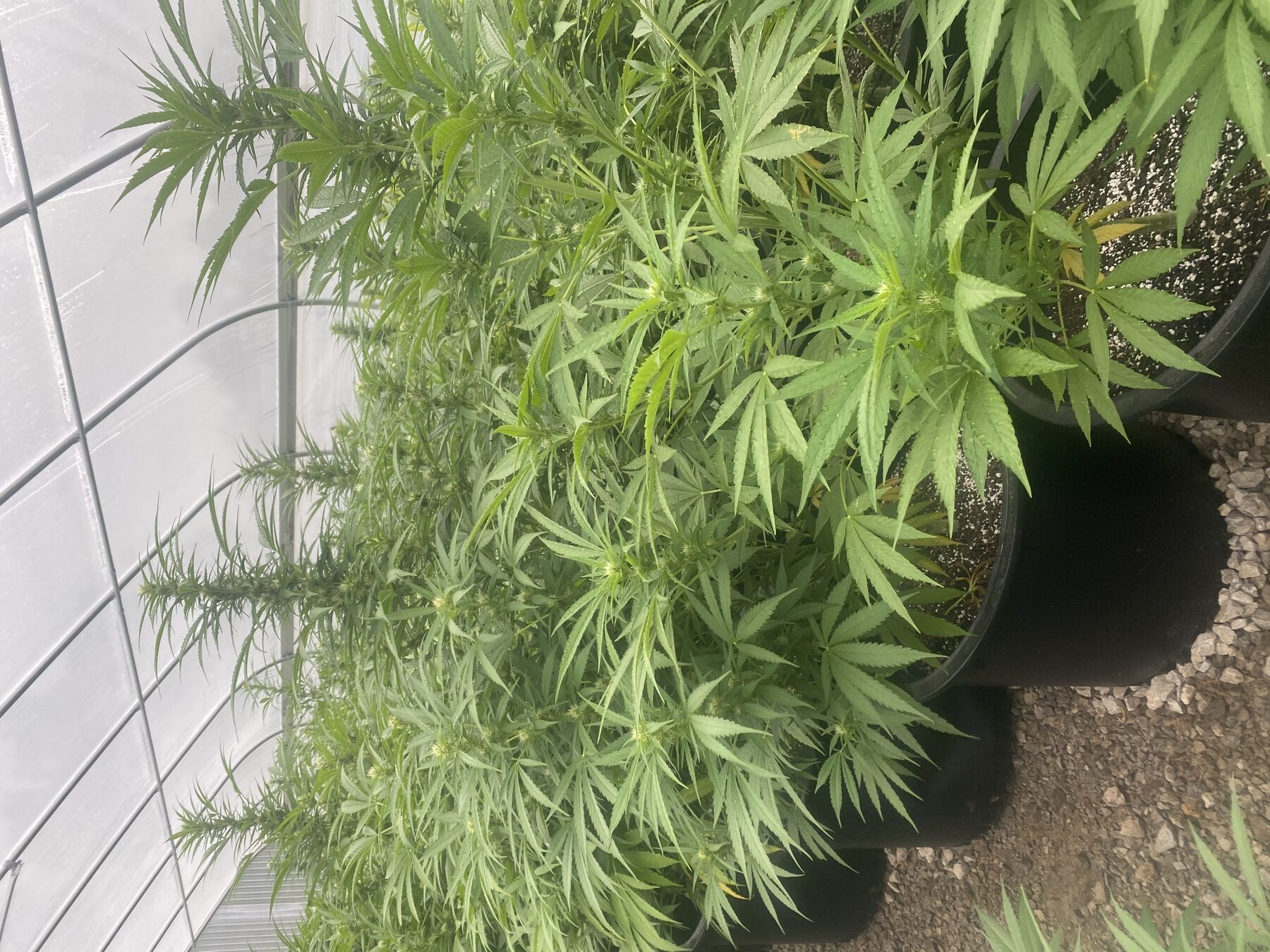
"To get real CBG, you have to harvest at the right moment — and that moment is short."
— Kaw Valley CannabisDifferent forms,
different uses.
CBG comes in several forms, each suited to different situations. Here's a quick guide.
Tinctures (like our Nano Micelle CBG)
Liquid drops you place under the tongue or add to a drink. The most common way to take CBG. Our Nano Micelle version uses 35-nanometer particle technology to absorb faster and more completely than traditional oil-based tinctures.
Isolate
A crystalline powder of pure CBG (our CBG isolate tests at 99.5% pure). Isolate is a favorite of formulators and product makers because it can be added to anything — drinks, food, lotions, custom blends — without affecting flavor or appearance. Buying at scale? We also offer bulk CBG isolate by the kilogram.
Distillate
Our CBG distillate is a high-potency, viscous extract that's more concentrated than oil but still pourable. Often used by experienced users, formulators, and people making their own products.
Topicals
CBG can be infused into creams, balms, and salves for direct application to the skin. We don't currently produce topicals ourselves, but our isolate and distillate are popular ingredients for formulators making them — available retail or wholesale.
Keep learning
Ready to go deeper? Browse our CBG Learn hub for guides on CBG vs CBD, what nano CBG really means, using CBG day to day, CBG for pets, and reading a CBG isolate COA.
Common questions.
Will CBG get me high?
No. CBG is non-intoxicating. It comes from hemp (which contains less than 0.3% THC by federal law) and CBG itself doesn't produce a "high" the way THC does.
Is CBG legal?
Hemp-derived CBG is federally legal in the United States under the 2018 Farm Bill, as long as the source plant contains less than 0.3% THC. State laws vary, so it's worth checking your local regulations. Kansas allows hemp-derived products, which is part of why we're here.
Will CBG show up on a drug test?
Pure CBG isn't typically what drug tests are looking for — they're looking for THC metabolites. However, some hemp products contain trace amounts of THC, and any hemp product carries some risk. If you're subject to drug testing, our isolate (which is 99.5% pure CBG with non-detectable THC) is the safest option, but no product can guarantee a clean test.
How much CBG should I take?
Start low and go slow. This is a general principle for any cannabinoid product. Begin with the smallest serving suggested on the label, see how you respond over a few days, and adjust from there. Everyone's body chemistry is different.
Are your products safe for pets?
We offer a CBG product specifically formulated for dogs and cats. Don't give human products to pets — the dosing is calibrated differently. If you have a pet with health conditions, talk to a veterinarian familiar with cannabinoid products before starting anything new.
Why is CBG more expensive than CBD?
Real CBG content requires an early, carefully timed harvest (which means less total biomass per plant) and an extraction process designed for it. The economics are simply different. You're paying for a more complicated production process and a less common product.
Ready to try CBG?
Nano Micelle CBG
Our most popular product. Faster-absorbing CBG tincture, perfect for getting started.
Shop tinctureAll CBG products
Tinctures, isolate, distillate, and pet products. All grown and made in Lawrence, Kansas.
View shop